What Is Smile Design? How Cosmetic Dentists Plan Your Smile

What Smile Design Really Means
Smile design is the planning process that comes before cosmetic dental treatment. Instead of choosing a procedure first and figuring out the details later, we begin by studying your teeth, bite, facial proportions, and goals to create a treatment plan that fits you. Depending on what you want to change, that plan may involve porcelain veneers, professional whitening, bonding, Invisalign, gum contouring, or a combination of treatments.
At Allure Dental in Mandeville, Dr. Eversgerd and our team use digital scans, high-resolution photography, facial analysis, wax-ups, and 3D-printed trial smiles to evaluate the proposed design before permanent treatment begins. This gives you an opportunity to see how changes in tooth shape, length, and proportion may look in your own mouth before we move forward.
For many people, the starting point is not a specific treatment. You may simply feel that your teeth look worn, uneven, narrow, short, or darker than you'd like.
Keep reading to understand how a smile design helps turn that feeling into a clear plan while keeping your natural features and goals at the center of the process.
Quick Overview
- Smile design is a planning process, not a procedure. It helps determine whether treatments such as veneers, bonding, whitening, or orthodontics make sense for your goals.
- Your face matters. We consider your lips, facial proportions, midline, tooth display, and smile movement rather than designing teeth from a standard template.
- A trial smile can help you preview the proposed changes. You can evaluate the shape and proportions before permanent treatment begins.
- The design is personalized. There is no single tooth shape, shade, or smile proportion that works for everyone.
The Three Inputs Every Smile Design Starts With
A thoughtful smile design requires more than choosing a tooth shade or looking at a digital image. We gather several types of information and use them together to understand how your smile currently looks and how proposed changes may fit your face.
High-Resolution Photography
Photography gives us a detailed record of your smile from different perspectives. We may photograph your teeth at rest, during a full smile, from the side, and in other positions that help us evaluate your smile dynamics.
These photographs allow us to study details such as tooth proportions, gum display, lip position, symmetry, and how much tooth shows when your lips are relaxed. They also give us a reference point for evaluating the proposed design as treatment progresses.
Digital Scans
A digital scan creates a three-dimensional record of your teeth and bite. Instead of using traditional impression material, we use a handheld scanner to capture the surfaces of your teeth.
The digital model can then be used during the design process to evaluate tooth length, width, shape, and position. It can also help us create a physical wax-up or 3D-printed trial smile based on the proposed design.
Facial Analysis
Your teeth do not exist separately from the rest of your face, so we consider facial proportions when planning cosmetic treatment. We look at factors such as your facial midline, lip position, tooth display, smile line, and the relationship between your teeth and surrounding facial features.
The goal isn't to give everyone the same smile. A design that looks appropriate on one person may look very different on someone else because facial proportions, tooth structure, and personal preferences vary.
How You Preview a Smile Before Permanent Treatment
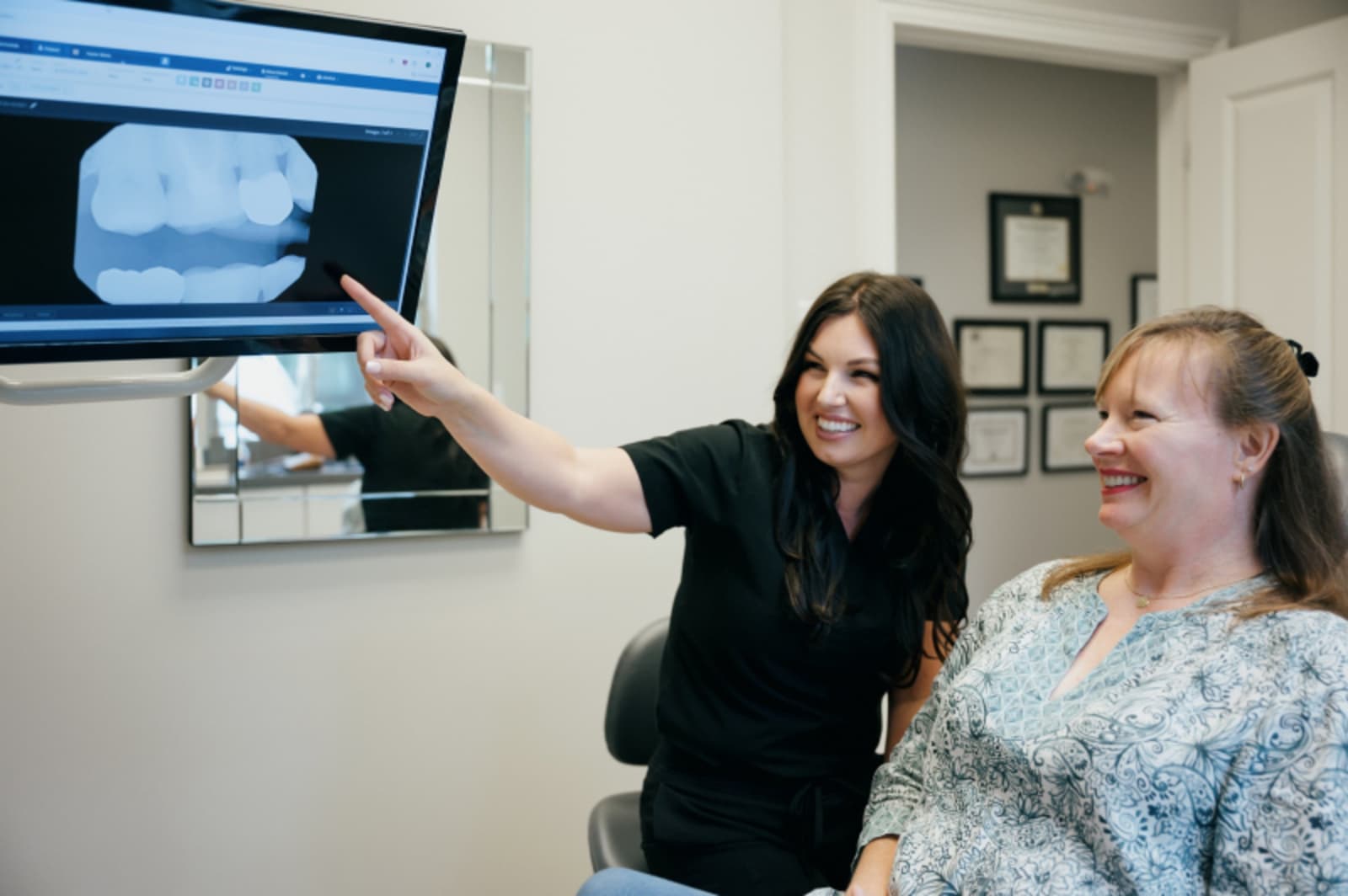
One of the most useful parts of smile design is having an opportunity to evaluate the proposed changes before committing to permanent treatment.
After we gather your photographs, digital scans, and other records, the information can be used to create a wax-up that represents the proposed tooth shapes and proportions. From there, a 3D-printed prototype can be made for a physical trial smile, sometimes called a mock-up.
The trial smile is placed over your existing teeth using temporary material. There is no permanent alteration simply from trying the mock-up. You can sit up, look at your smile from different angles, and get a better sense of how the proposed changes affect your appearance.
This can be particularly helpful when considering veneers. Seeing a proposed smile physically can make it easier to evaluate whether the teeth appear too long, too wide, too prominent, or brighter than you prefer.
It also gives us an opportunity to make adjustments while the design is still being finalized. Once the direction is established, the final treatment can be planned around that design rather than relying entirely on a patient's imagination or a computer rendering.
Inside the Smile Design Consultation
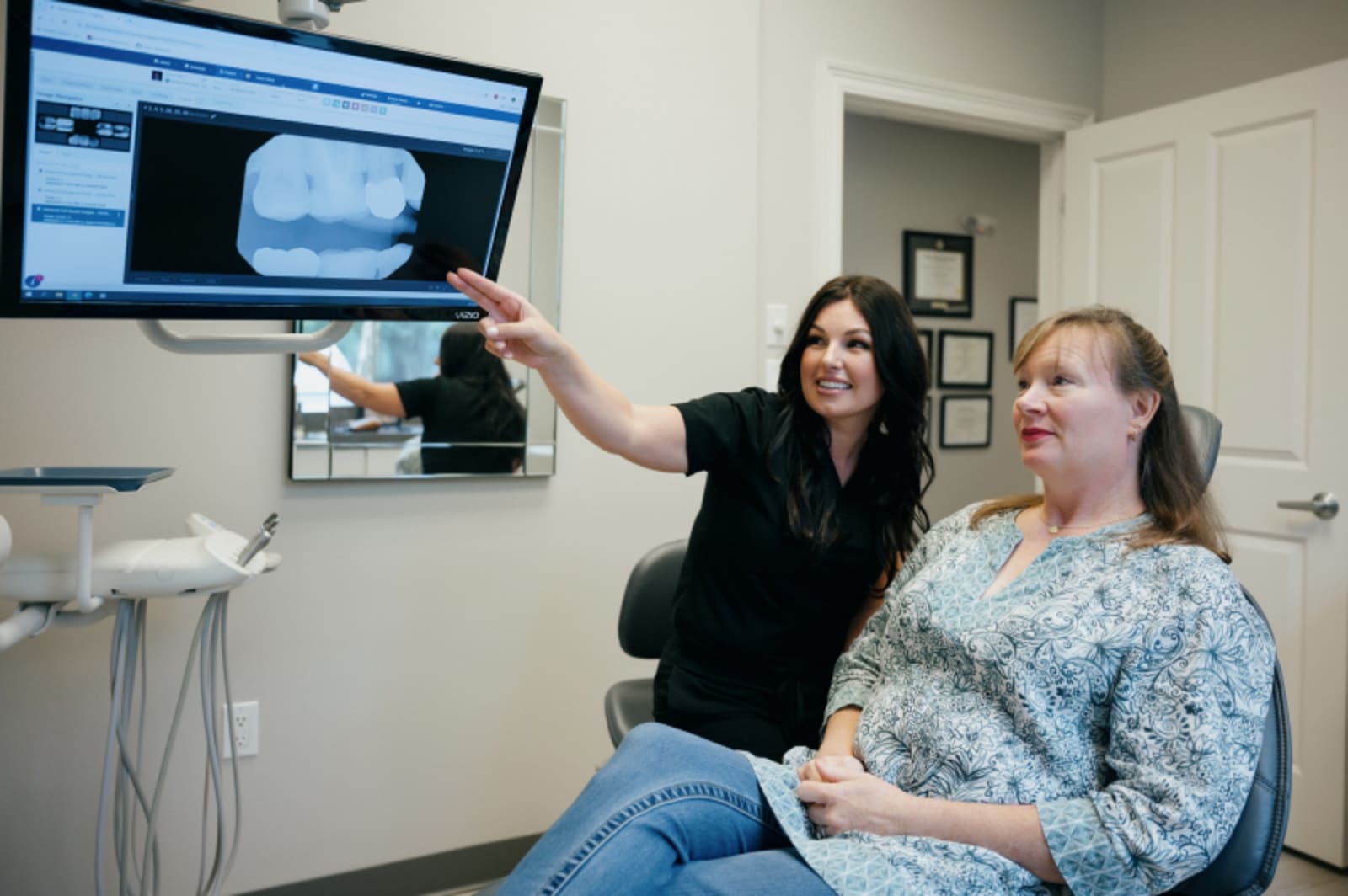
Smile design is about more than aesthetics. Before we begin planning cosmetic changes, we want to understand the condition and function of your teeth.
1. We Evaluate Your Oral Health and Bite
We begin by looking at the health and function of your teeth and gums. Decay, gum disease, significant tooth wear, grinding, or bite concerns may need to be addressed before cosmetic treatment.
The goal is to make sure the proposed treatment makes sense for your individual situation rather than placing cosmetic work over an unresolved dental problem.
2. We Take Photographs and a Digital Scan
Once we've evaluated your oral health, we collect the records needed for the design. This includes detailed photographs and a digital scan of your teeth and bite.
We may ask you to relax your lips, smile naturally, speak, and turn your head so we can capture different views of your smile and facial features.
3. We Analyze Your Smile and Facial Proportions
We use the information from your records to evaluate how your teeth relate to your face. This includes looking at tooth proportions, midline, lip position, tooth display, symmetry, and the relationship between your smile and lower lip.
These details help us determine what changes may look natural and proportionate for you.
4. We Talk About What You Want to Change
Your goals are an important part of the design. Maybe you want to address worn or uneven teeth, change the color of your smile, close spaces, improve symmetry, or make your smile more noticeable.
We also talk about what you mean when you say you want your smile to look "natural." Some people want subtle changes, while others are comfortable with a more noticeable transformation. Understanding that difference helps us create a plan that reflects your preferences.
5. We Review the Proposed Direction Together
Before permanent treatment begins, we review the proposed design and discuss the available options. Depending on what is causing your concerns, the plan may involve veneers, whitening, bonding, gum contouring, Invisalign, or another combination of treatments.
The design phase is where we can make decisions and adjustments before treatment becomes irreversible.
What Makes a Smile Look Natural?
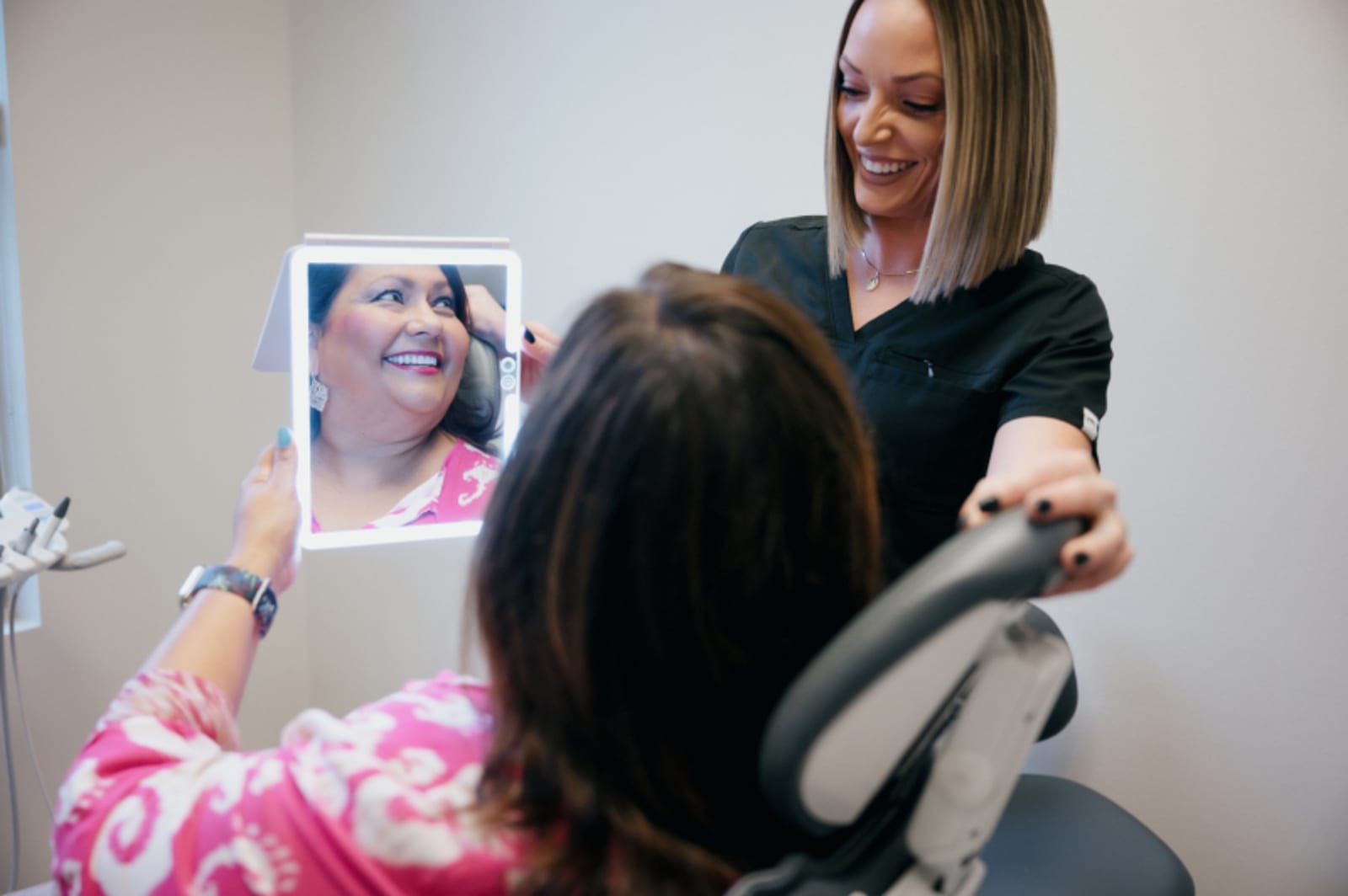
Many people assume that creating a natural-looking smile is primarily about choosing the right shade. Color is important, but it is only one part of the design.
Natural teeth have variation in translucency, texture, shape, and how they reflect light. A tooth that looks appropriate under clinical lighting may appear different in sunlight, indoor lighting, photographs, or other environments.
We also consider:
- Tooth proportions: The width and length of the teeth should work with your facial proportions and smile.
- Line angles and surface texture: These details affect how light reflects from the teeth and can influence how natural they appear.
- Tooth display: How much tooth shows when your lips are relaxed and when you smile can influence the overall appearance of the smile.
- Gum contours: The relationship between the gum line and tooth shape contributes to symmetry and proportion. In some cases, gum contouring may be considered as part of the overall plan.
- Color and translucency: The goal is to select a shade and level of translucency that fits the design rather than simply choosing the brightest available option.
- Your individual features: Age, facial proportions, existing tooth structure, and personal preferences all influence the final design.
The dental laboratory and ceramist are also important parts of this process. Cosmetic restorations involve a collaboration between the dentist and laboratory team to create the desired shape, characterization, texture, and color for each case.
What Happens After Smile Design?
Smile design is the planning stage rather than a separate cosmetic procedure. What happens next depends on the treatment plan created for your smile.
For some people, the plan may involve professional whitening or bonding. Others may benefit from veneers, orthodontic treatment, gum contouring, or a combination of procedures.
If veneers are part of the plan, we use the approved design to guide the preparation and fabrication process. The amount of preparation required depends on your existing tooth structure, bite, tooth position, and the changes being planned. Not every case requires the same amount of tooth preparation.
The timeline also varies. Some treatments can be completed in a relatively small number of visits, while more comprehensive cases may require several stages. We'll explain the expected sequence and timing during your consultation so you know what to expect before treatment begins.
Start With a Plan for Your Smile
You don't have to decide on a cosmetic procedure before you understand what changes would actually make sense for you. Smile design gives us a structured way to evaluate your smile, discuss your goals, and explore potential treatment before permanent changes are made.
At Allure Dental in Mandeville, we combine photography, digital scanning, facial analysis, and physical smile previews to develop a plan around your individual features and goals.
If you're considering cosmetic dental treatment and want to understand your options first, call Allure Dental at (985) 951-2220 to schedule a consultation with Dr. Eversgerd.
Connect
With Us
We look forward to meeting you.
Contact us today at (985) 951-2220 to schedule an appointment.